
Empowering Inclusive Excellence: Wheelchair Rugby Super Week 2026
13 July 2026
Safe Sport conducts a seminar for competitors about to go head-to-head later that weekend.
General dependency, power imbalances, and negative public perception towards disability suggest that para athletes may be up to 4 times more likely to experience non-accidental harms (Tuakli-Wosornu et al., 2020).
As athletes geared up for the Wheelchair Rugby Super Week 2026, the focus extended beyond tactical excellence to ensuring a secure environment for all. Safe Sport was pleased to conduct a dedicated safeguarding seminar for the cohort of international athletes taking part in the tournament later that weekend.
Considering the various cultures and backgrounds of the athletes, the introductory session covered the definition and importance of Safe Sport, how to identify safeguarding incidents, and helpful strategies for advocate for yourself and others. A key point of the session was recognising the unique risk profile of para-athletes. While they are undoubtably formidable and tough, para athletes have highest risk for experiencing non-accidental harms of all athlete groups (Tuakli-Wosornu et al., 2020).
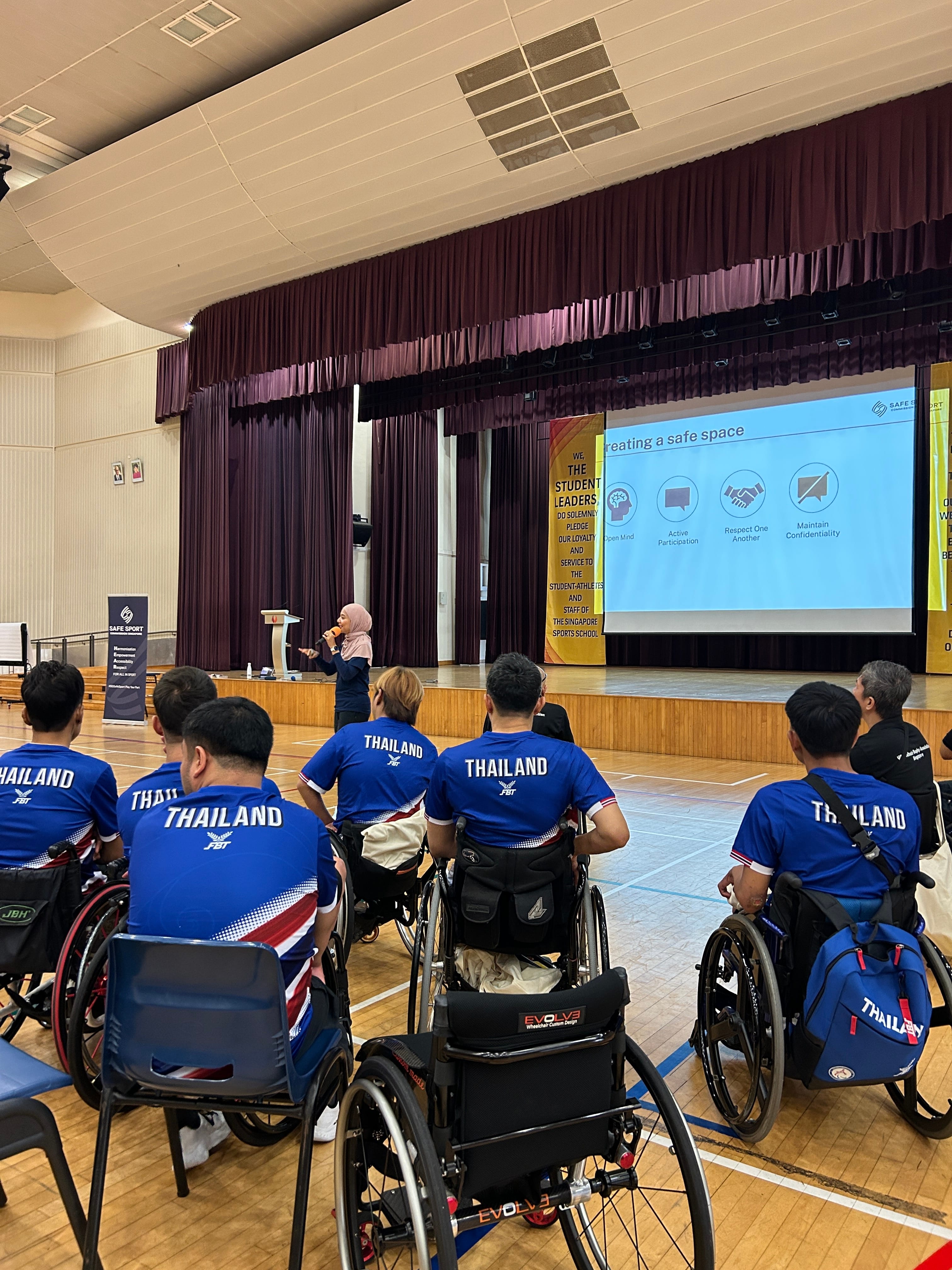
The Thai contingent.
A core highlight of the seminar was its diverse, international turnout. While the athletes hailed from various countries and cultural backgrounds, the session beautifully demonstrated their shared understanding of positive behaviours in sport. Bilingual athletes volunteered to provide translations in small groups, sparkling lively discussions in their native languages.
By integrating safeguarding education into the tournament’s lead-up, the organisers have set an impressive standard for international programming. We hope that for the participants, Wheelchair Rugby Super Week 2026 will be remembered not just for high-octane athleticism, but as an example of a unified, safe, and respectful sporting community.
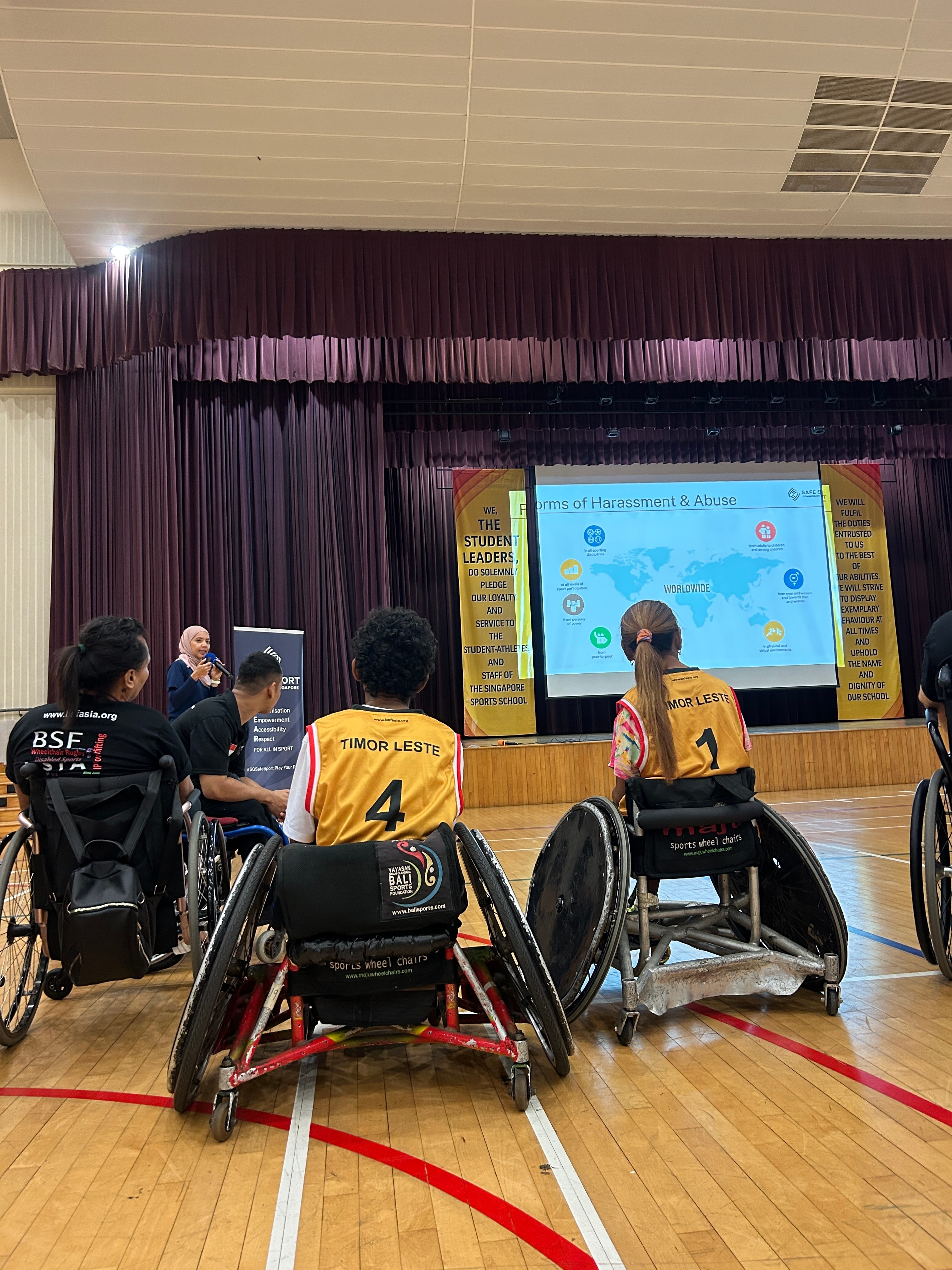
Athletes from Timor Leste.