

Balancing Challenge and Support in High Performance Sport
Safe Sport is not a box to be ticked, it is a culture.
Culture is shaped in rooms like the one we gathered in recently, where coaches, high performance managers, and practitioners from across Singapore’s National Sports Associations came together to ask the hard questions that matter most.
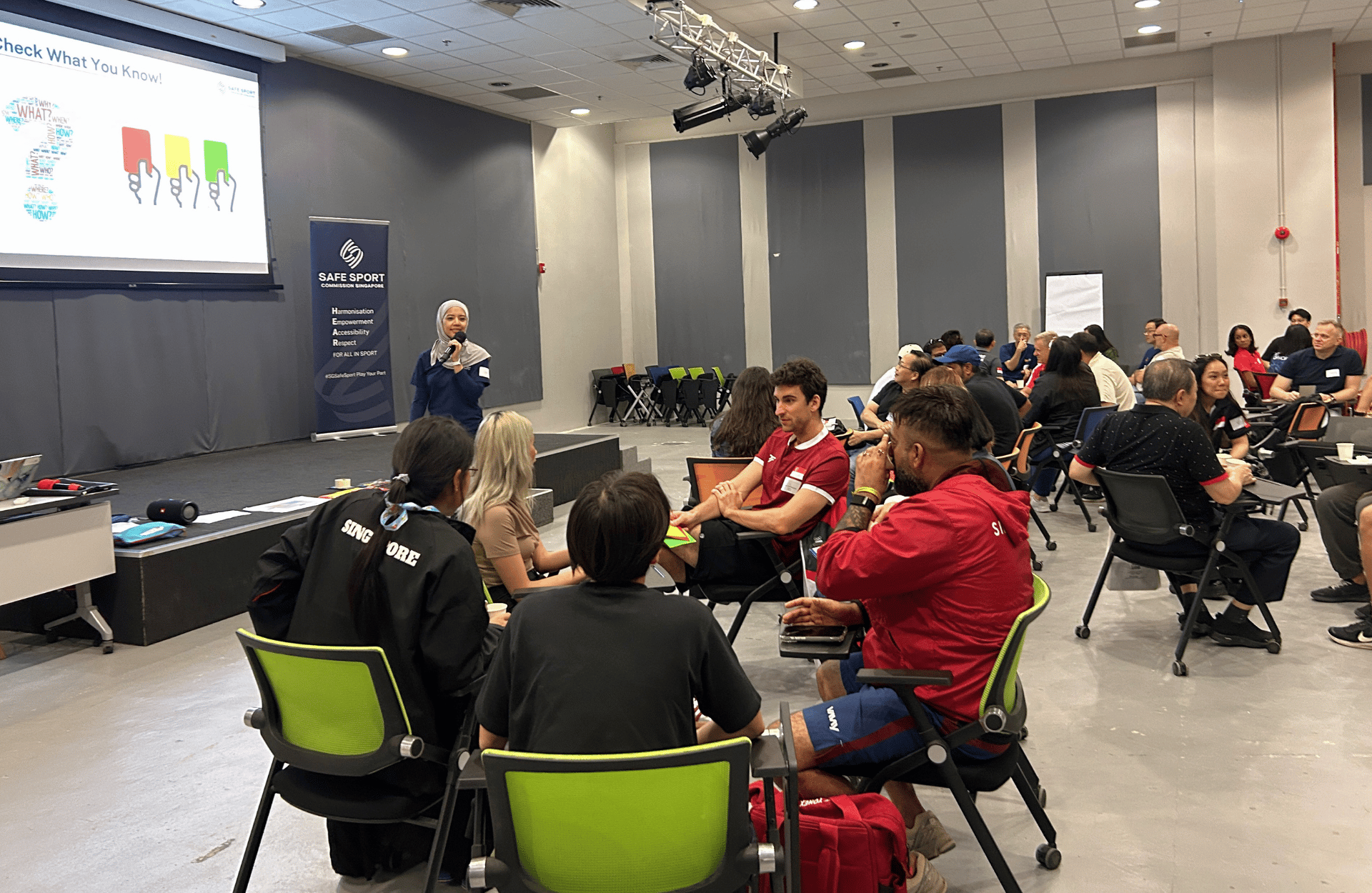
Our latest Safe Sport Workshop for NSA Personnel Working with Athletes brought together 50 participants to examine why safeguarding matters, what risk factors look like within their own environments, and how they can more intentionally support the athletes in their care.
Using the socioecological model, we explored how organisational culture and unspoken norms can quietly enable harmful behaviours to persist. Two key risk factors consistently surfaced across discussions: fear of speaking up due to perceived consequences, and cultures of tolerance that normalise concerning behaviour.
These sentiments reflect broader evidence in sport. Research by Hurst, Kavussanu & Stirling (2025) highlights that elite athletes report lower perceptions of psychological safety compared to recreational athletes, making them less likely to disclose experiences of interpersonal violence. This gap is not just theoretical, it is lived, and it is one the sport system must collectively address.
A key shift in thinking emerged during the workshop:
“The reassurance that Safe Sport is not about training weak athletes."
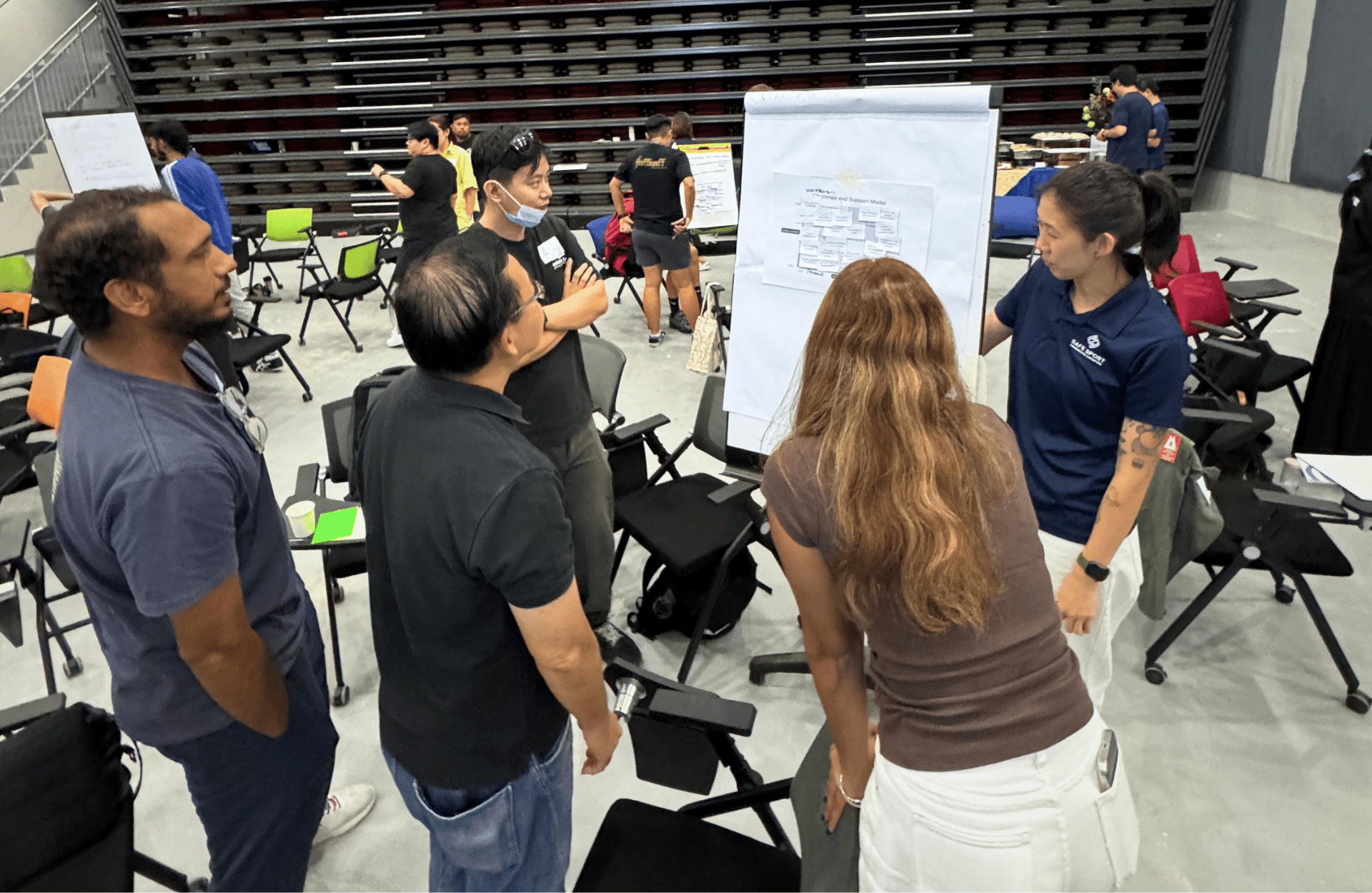
Through the challenge–support model by Fletcher and Sarkar, participants examined how high performance and athlete wellbeing are not opposing forces. Athletes can be pushed to excel while still being supported in environments that prioritise trust, respect, and psychological safety.
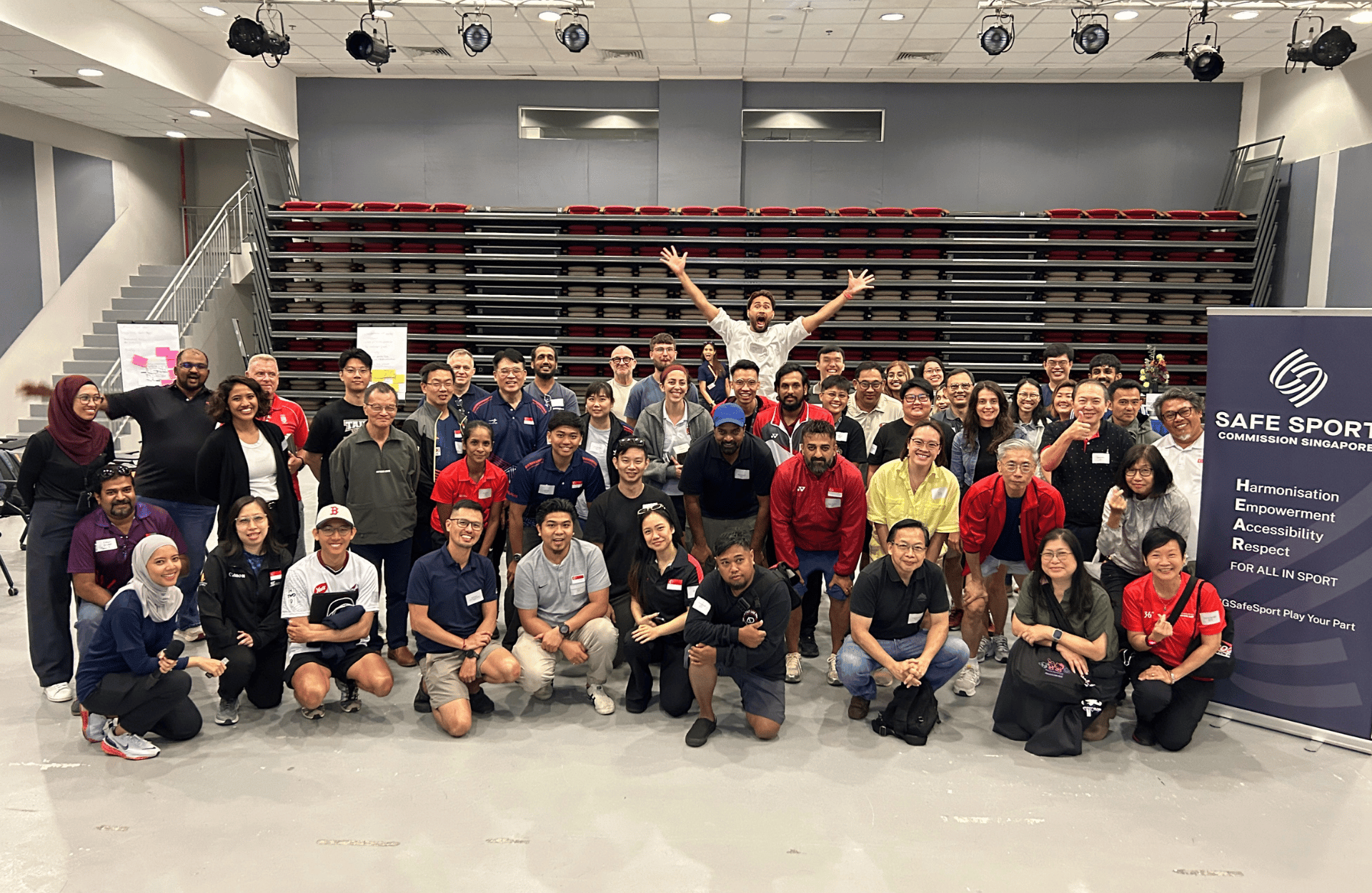
Participants reflected deeply on their own roles in shaping these supportive environments and what it would take to move closer to a truly facilitative culture.
“Thinking more intentionally about where my programme fits in the model.”
“Our responsibility in creating and building a safe environment for all.”
What stood out most was not just awareness but ownership, a shared recognition that Safe Sport is built through everyday decisions, behaviours, and the norms we choose to uphold.